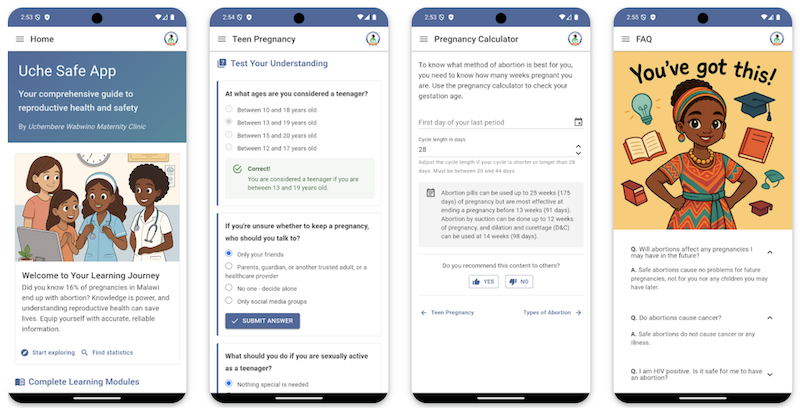
Mobile learning is often presented as a scalable solution to educational inequality. With teacher shortages, limited access to quality education, and growing mobile phone ownership, digital learning appears to offer an unprecedented opportunity to expand educational access.
Yet many initiatives struggle to achieve lasting impact, particularly in rural and underserved communities.
Three Principles for Sustainable Mobile Learning
Successful mobile learning is all about designing for the realities learners face.
1. Be Offline First
Internet connectivity remains unreliable or unaffordable for many communities. Prioritizing offline-friendly solutions such as USSD services or Progressive Web Apps (PWAs) ensures educational content remains accessible regardless of network conditions.
2. Design for Low Literacy
Effective learning experiences should minimize cognitive and technical barriers. Simple interfaces, localized languages, visual cues, bite-sized content, and streamlined navigation can significantly improve usability for first-time and low-literacy users.
3. Build with Communities, Not for Them
Educational technology must evolve through continuous engagement with learners. Agile and user-centered development, which is grounded in field research, rapid prototyping, and iterative feedback, helps ensure solutions address genuine local needs rather than assumptions.
From Technology Projects to Learning Outcomes
Sustainable educational technology is ultimately less about sophisticated features and more about context, accessibility, and collaboration. By embedding these principles from the outset, organizations can build mobile learning initiatives that are not only scalable but also relevant, inclusive, and more likely to achieve long-term impact.
👉 Read the full article to explore practical design principles for developing mobile learning solutions that work in low-resource environments.
Case study at a maternity clinic in Malawi